How Flexible Gas Connectors Wear Out
Flexible gas connectors fail from corrosion, vibration, heat, and age. Here is how they wear out in Fountain Valley homes and when to replace them.
Flexible gas connectors wear out because the same corrugated stainless steel or brass that makes them bendable also makes them vulnerable to corrosion, vibration fatigue, and heat cycling. In Fountain Valley, that process usually takes 8 to 12 years, but coastal air and older appliances can shorten it to 5 or 6. The result is a connector that still looks intact from the outside while the inside is already thinning, cracking, or clogged with debris.
We see this every week in Fountain Valley homes built between the 1960s and 1990s, where the original flex line has been feeding a furnace or water heater for decades. This post covers what a flexible gas connector does, why it fails here specifically, how to spot the warning signs, and when replacement is the only safe call.
What a Flexible Gas Connector Actually Does
A flexible gas connector is a short, bendable length of corrugated stainless steel or coated brass that carries gas from a rigid supply pipe to an appliance. It absorbs vibration, allows for small alignment adjustments during installation, and makes it possible to pull a dryer or range out for service without disconnecting the entire gas system.
Most residential connectors are 12 to 36 inches long and rated for 1/2-inch or 3/4-inch gas flow. They are not designed to be permanent. The manufacturer's tag on nearly every flex line sold in California lists a replacement interval, and for most models that interval is 5 to 10 years. Homeowners rarely read that tag, and even fewer replace the line on schedule.
The connector is also the most exposed part of your gas system. It sits behind the appliance, often in a cabinet or utility closet, where it collects dust, grease, and moisture. That environment is what drives wear.
Why Flexible Gas Connectors Wear Out in Fountain Valley
Fountain Valley sits about six miles from the ocean, and that distance is close enough for salt air to reach every utility closet in the city. Salt accelerates corrosion on brass fittings and on the thin walls of corrugated stainless. We find green or white oxidation on fittings in homes east of the 405 just as often as in neighborhoods closer to the coast.
Heat cycling is the second factor. Every time your furnace or water heater fires up, the connector expands. When it shuts off, it contracts. A water heater that cycles 4 to 6 times a day will flex its connector roughly 2,000 times a year. After a decade, that is 20,000 small movements on a corrugated wall that is often less than 0.01 inches thick.
Vibration from appliances makes it worse. A dryer that shakes during the spin cycle, a furnace blower with a worn bearing, or a water heater with sediment rattle all transfer movement into the flex line. Over time, that movement creates fatigue cracks at the crimp rings, which are the weakest points on the connector.
Finally, there is the age of the housing stock. Much of Fountain Valley was built out between 1962 and 1985. If your home still has its original gas connector, it is well past any reasonable service life, regardless of how it looks.
How Long Do Flexible Gas Connectors Last in Fountain Valley?
In Fountain Valley, a flexible gas connector lasts 8 to 12 years under normal conditions, and 5 to 7 years in homes with high humidity, coastal exposure, or heavy appliance use. The manufacturer's rating is the ceiling, not the average.
Three variables shorten that window:
- Moisture: Utility closets with a water heater often run 10 to 15 percent higher humidity than the rest of the house.
- Heat: Connectors within 12 inches of a furnace flue or water heater draft hood degrade faster.
- Movement: Appliances that vibrate or get pulled out for cleaning stress the connector every time.
If your connector is more than 10 years old and you cannot find a date stamp, treat it as due for replacement. The cost of a new connector is minor compared to the cost of a gas leak.
Signs Your Gas Flex Line Needs Replacement in Fountain Valley
Signs your gas flex line needs replacement in Fountain Valley include visible corrosion, a gas smell near the appliance, soot on the connector, and a yellow or orange burner flame instead of blue. Any one of these is enough to stop using the appliance and call for an inspection.
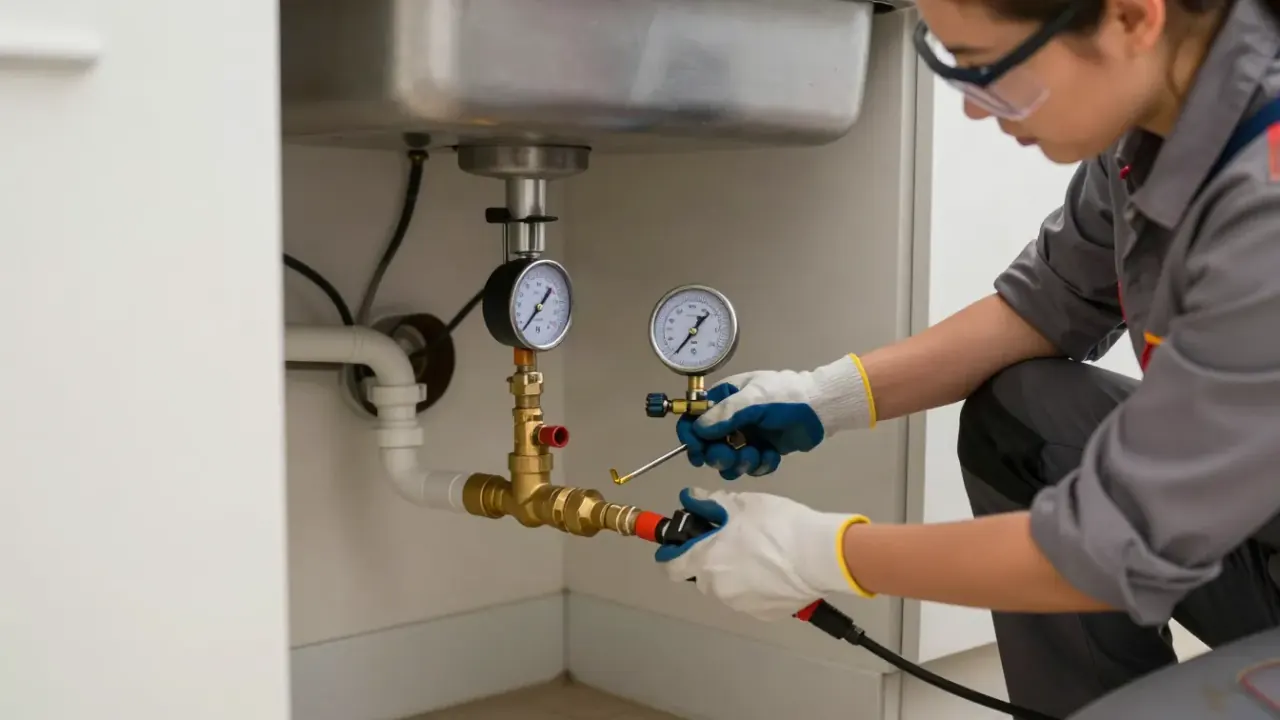
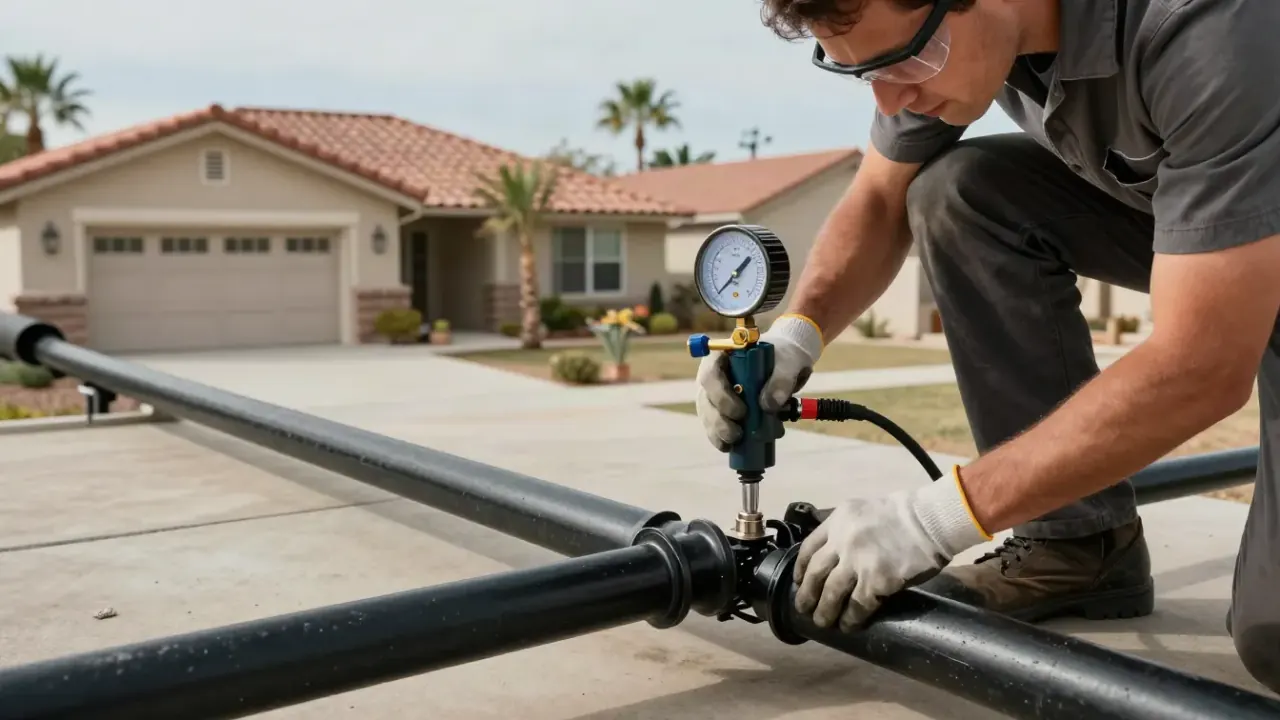
Here is what we look for during a Gas Line Pressure Testing Fountain Valley CA visit:
- White or green powder on the brass fittings - that is oxidation, and it means the metal is thinning.
- Kinks or sharp bends in the corrugated section. A kink restricts flow and creates a stress point.
- Soot or black residue near the crimp rings, which indicates a small leak that has been burning.
- A rotten-egg smell when you open the utility closet. Mercaptan is added to natural gas so you can smell it.
- Yellow flame at the burner. A healthy flame is blue with a crisp inner cone.
If you notice any of these, shut off the gas at the appliance valve and ventilate the area. Do not tighten the connector yourself - the fittings are easy to over-torque and crack.
Common Mistakes We See With Flexible Gas Connectors
The most common mistake is reusing an old connector when a new appliance is installed. A new dryer or range comes with a new flex line in the box, and that new line is rated for the appliance. Reusing the old one saves five minutes and risks a leak at a fitting that has already been compressed once.
Second, homeowners sometimes wrap a leaking connector with tape or sealant. That is never a fix. Gas will find its way through, and the tape hides the evidence that the connector is failing.
Third, we see connectors that are too long and looped behind the appliance. A loop traps gas and creates a low point where moisture collects. The connector should be as short as possible while still allowing the appliance to be pulled out.
Fourth, people skip the leak test after reconnecting. A 50/50 soap-and-water solution brushed on every fitting will show bubbles if there is a leak. If you do not see bubbles after 30 seconds, the joint is tight. If you do, shut the gas off and call us.
Finally, there is the do-it-yourself replacement with a universal connector from a big-box store. Those connectors are legal, but they must be matched to the appliance's BTU rating and the gas type. A connector rated for 40,000 BTU on a 75,000 BTU furnace will starve the burner and produce carbon monoxide.
When to Call a Professional
Call a professional the moment you smell gas, see corrosion on a fitting, or notice a yellow flame. Those are not maintenance items - they are safety issues. We handle Flexible Gas Connector Replacement Fountain Valley CA every day, and we can usually complete a standard replacement in under an hour.
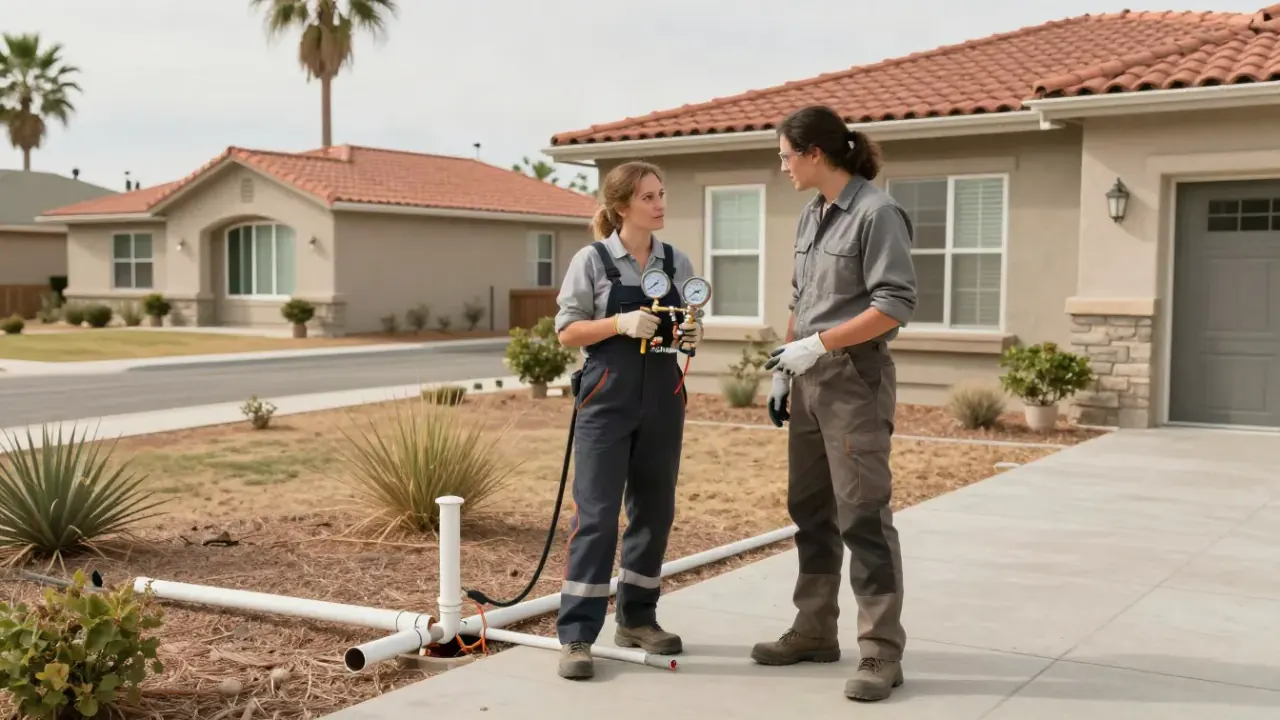
You should also call us if your connector is more than 10 years old, if you are installing a new appliance, or if you are moving a dryer or range and the existing line does not reach. We will inspect the connector, test the line, and replace anything that is not up to code.
For homeowners in Green Valley Gas Line Repair, we often find connectors that have been in place since the home was built in the 1970s. Those lines are past due, and we replace them with code-compliant connectors rated for the appliance.
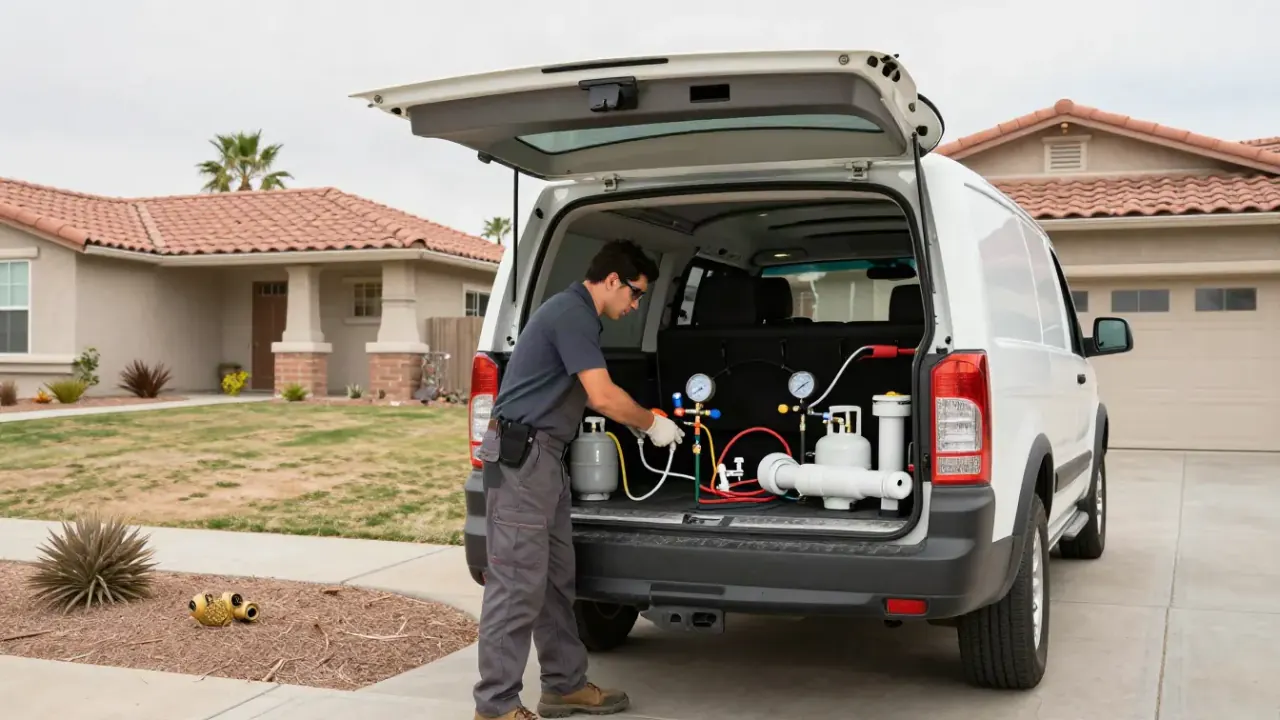
If you are not sure whether your connector is safe, we offer a full Gas Leak Detection and Repair Fountain Valley CA inspection that includes a pressure test and a visual check of every flex line in the house.
Frequently Asked Questions
How long do flexible gas connectors last in Fountain Valley?
Most flexible gas connectors last 8 to 12 years in Fountain Valley, but coastal humidity and heat cycling can shorten that to 5 to 7 years. If your connector is older than 10 years or has no visible date stamp, replace it. The manufacturer's tag on the line lists the exact interval for your model.
How do I know if my gas flex line is worn out in Fountain Valley CA?
Look for white or green corrosion on the fittings, a rotten-egg smell near the appliance, soot on the connector, or a yellow burner flame. Any of these means the line is worn. A soap-bubble test on the fittings will also show leaks. If you see bubbles, shut the gas off and call us.
When should I replace my flexible gas connector in Fountain Valley?
Replace it every 8 to 10 years, whenever you install a new appliance, or immediately if you see corrosion or smell gas. In Fountain Valley, the coastal air pushes us to recommend replacement at the 8-year mark for most homes. A new connector costs far less than a gas leak repair.
Are worn gas connectors dangerous in Fountain Valley?
Yes. A worn connector can leak gas into your home, which creates a fire and explosion risk. It can also starve the appliance of fuel, leading to carbon monoxide production. If you suspect your connector is worn, shut off the gas at the appliance valve, ventilate the area, and call a licensed technician.
Get Help With Gas Line Repair in Fountain Valley
If your flexible gas connector is more than a few years old, or if you have noticed any of the warning signs above, do not wait. We replace worn connectors, test the line, and make sure your appliance is burning clean. Call Fountain Valley Gas Line Repair at (657) 644-0068 for same-day service.