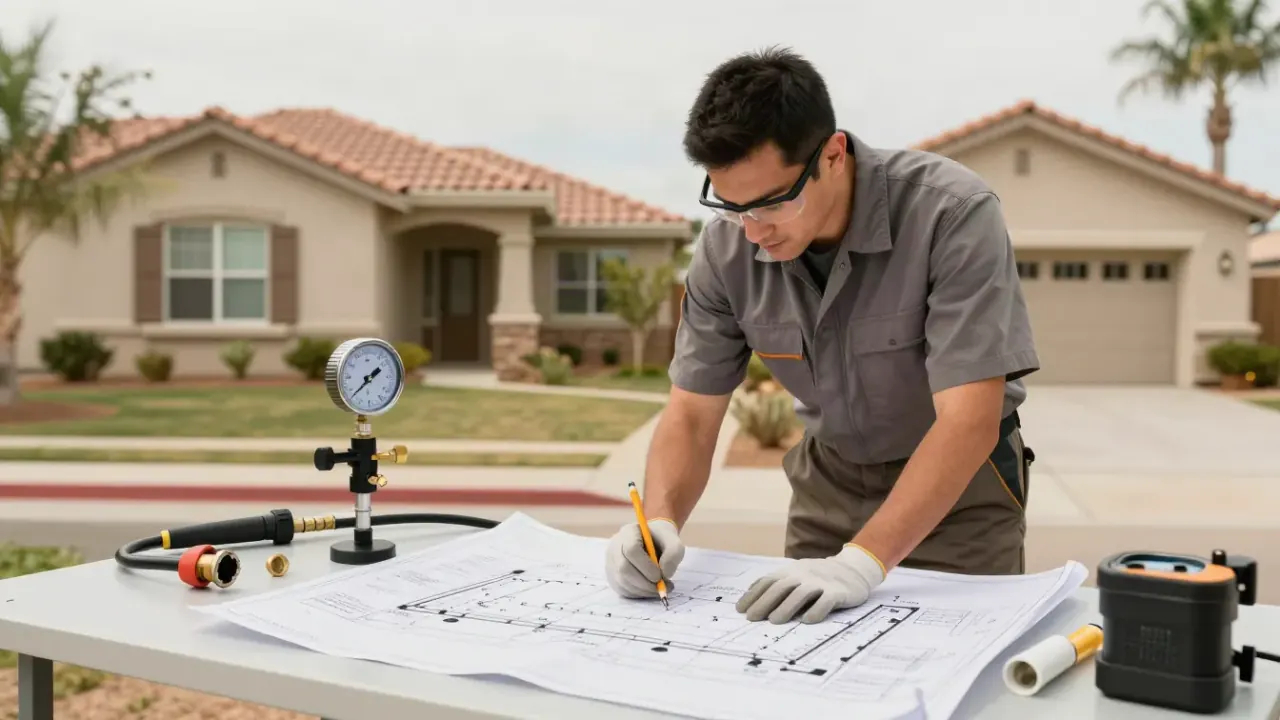
Choosing Gas Piping Materials for Your Home
Black iron, copper, CSST, or corrugated stainless - here's how to pick the right gas piping material for your Fountain Valley home, and what each one costs.
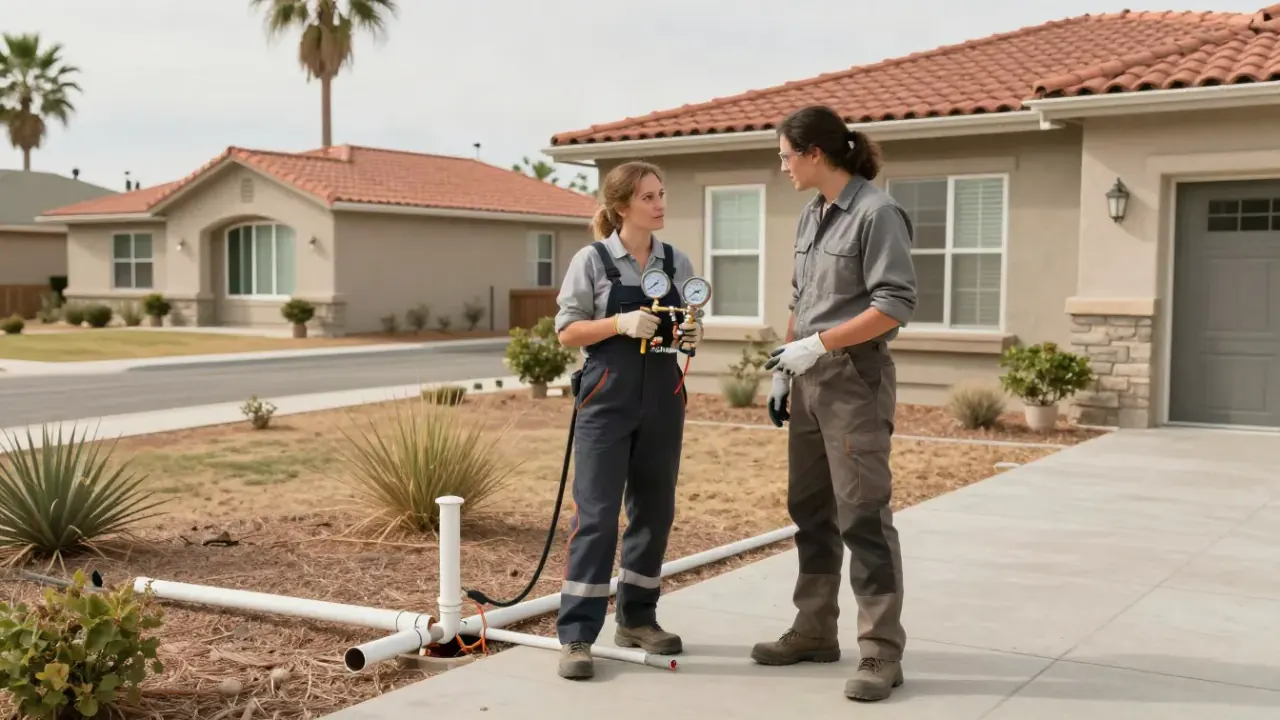
The short answer: for most Fountain Valley homes, black iron pipe is the best choice for exposed runs and CSST is the best choice for long attic or crawlspace runs, while copper is only appropriate outdoors in our coastal air if it is properly protected. Choosing gas piping materials for your home in Fountain Valley CA comes down to three things - where the pipe runs, what it will be exposed to, and what your local inspector will sign off on.
We run gas lines across Fountain Valley every week, from 1960s tract homes near Mile Square Park to newer builds off Talbert Avenue. The rest of this guide walks through each material, what it costs in 2026, and the mistakes we see homeowners make when they try to pick pipe on their own.
The Short Answer on Gas Piping Materials
Choosing gas piping materials for your home Fountain Valley CA is the process of matching a pipe's metal, wall thickness, and fitting type to the appliance it feeds and the environment it passes through. Get that match right and the line will outlive the house. Get it wrong and you are looking at a leak call within a few years.
Four materials cover almost every residential job in this city:
- Black iron (Schedule 40 steel) - the default for exposed runs, garages, and exterior walls.
- Copper (Type L or K) - legal in California, but only with the right fittings and protection from our salt air.
- CSST (corrugated stainless steel tubing) - flexible yellow-jacketed tubing for long, snaking runs.
- Flexible appliance connectors - the short braided or coated lines behind your range, dryer, and water heater.
If you are not sure which one your house already has, that is usually the first thing we check. A mismatched material is one of the most common causes of a slow leak we find during Gas Leak Detection and Repair Fountain Valley CA calls.
What Gas Pipe Material Is Best in Fountain Valley?
What gas pipe material is best in Fountain Valley depends on the run: black iron for exposed and exterior work, CSST for concealed attic and crawlspace runs, and copper only where it is protected from salt air. There is no single winner - the right answer changes with the location of the pipe.
Here is how we break it down on a typical job:
- Garage and exterior walls: black iron. It handles heat, UV, and the marine layer without complaint.
- Attic runs over 20 feet: CSST. Fewer joints, faster install, less cutting into your ceiling.
- Underground exterior runs: coated or wrapped pipe, never bare steel in our soil.
- Appliance hookups: a new flexible connector rated for the appliance, replaced every 5 to 8 years.
Fountain Valley sits close enough to the coast that salt-laden air reaches most neighborhoods. That matters more than most homeowners expect. Bare steel outdoors will start to pit within 6 to 10 years here, and unprotected copper will develop a green patina that hides pinhole leaks until they are through the wall.
We see this constantly in the older tracts around Gas Line Repair in Mile Square Park Area, where 1960s and 1970s builds still have their original exterior gas stubs. If your home was built before 1980 and the exterior pipe has never been replaced, it is worth a look.
Black Iron vs Copper Gas Pipe in Fountain Valley
Black iron vs copper gas pipe in Fountain Valley is not really a fair fight: black iron wins on cost, durability, and code simplicity, while copper only makes sense when you need a smaller diameter or a specific routing. Black iron is the standard for a reason.
Where black iron wins
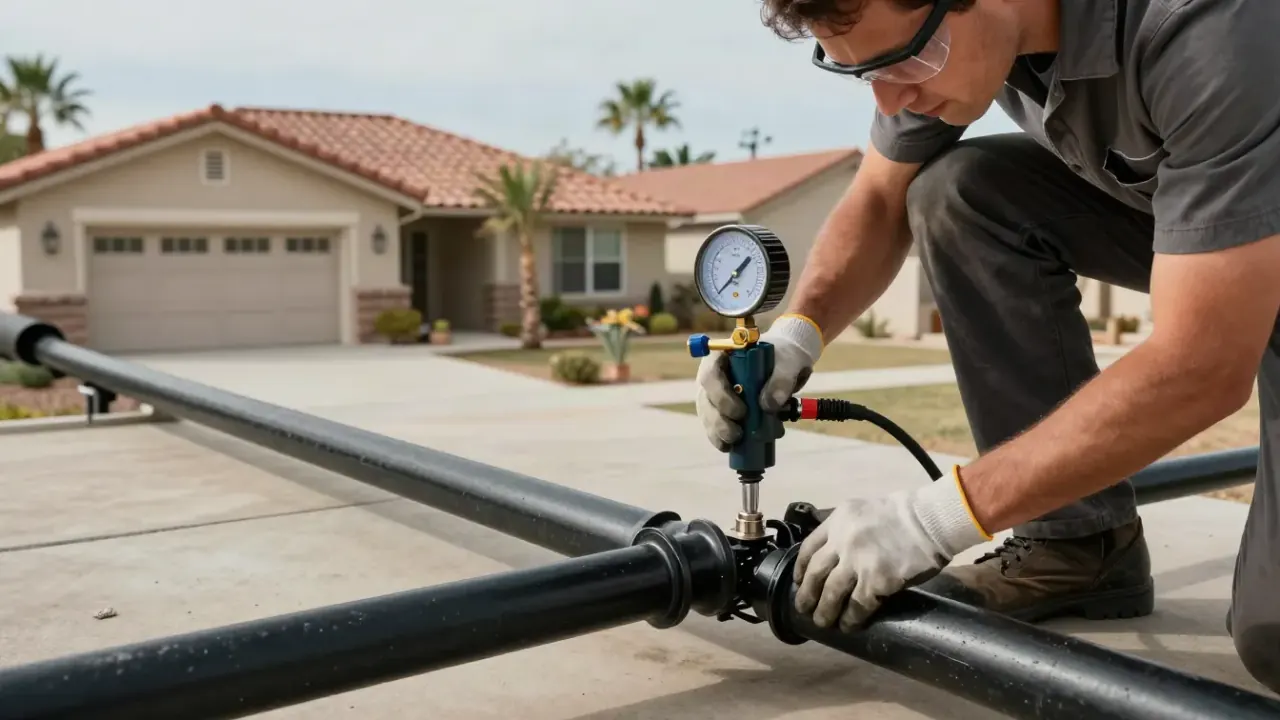
Black iron is Schedule 40 steel, joined with threaded fittings and sealed with pipe dope rated for natural gas. It is cheap, it is strong, and every inspector in Orange County knows exactly what to look for. A 3/4-inch black iron run from the meter to a furnace typically runs $18 to $30 per linear foot installed in 2026, including fittings and pressure testing.
It also handles the heat. A black iron line running along a garage wall in August, when surface temps hit 110°F, does not care. Copper does.
Where copper still works
Copper is allowed for natural gas in California when you use Type L or Type K hard copper and flare or braze the joints - never solder. The catch is corrosion. In Fountain Valley's coastal air, exposed copper needs to be painted or sleeved, and it should never be buried in soil without a protective wrap.
Copper costs more per foot than black iron, roughly $22 to $38 per linear foot installed, and it is softer, so it dents. We use it when a run needs a tighter bend radius than iron allows, or when we are matching existing copper in an older home.
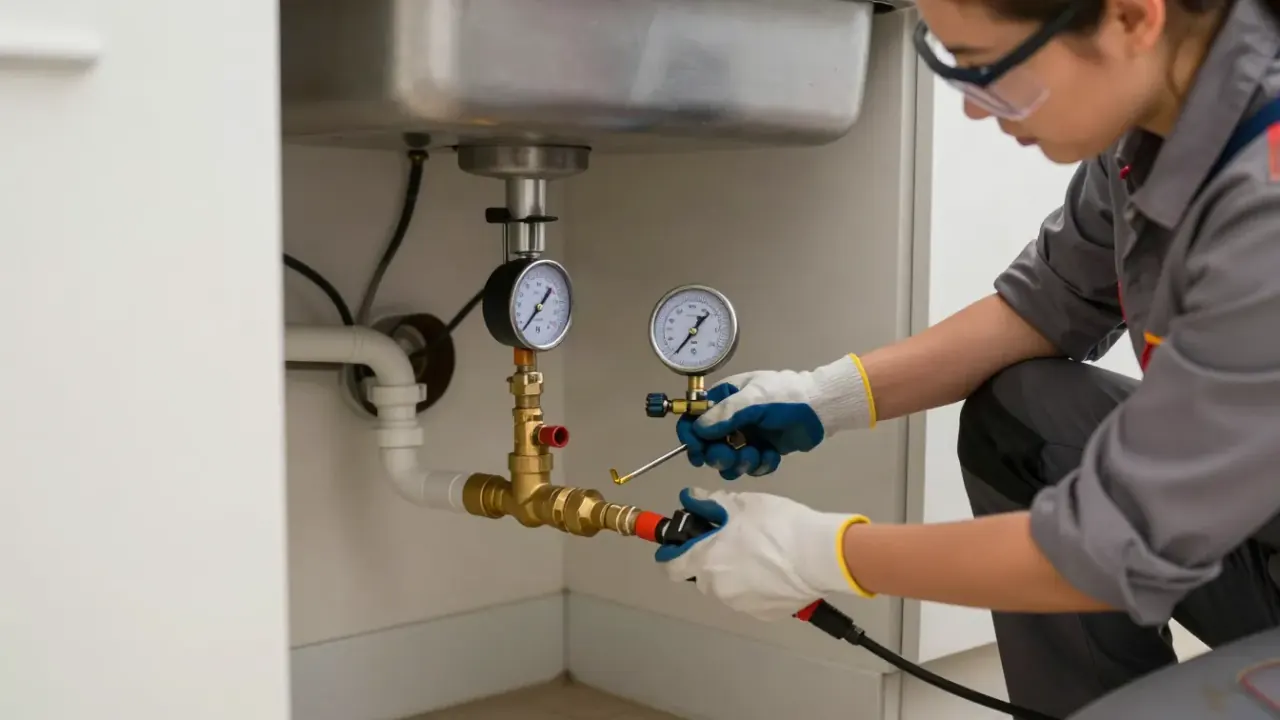
One more thing: if your home has copper gas lines that have never been pressure tested, get them checked. A small pinhole in a copper line inside a wall is one of the harder leaks to find. That is exactly the kind of work we handle through Gas Line Pressure Testing Fountain Valley CA.
CSST and Flexible Connectors: Where They Fit
CSST is corrugated stainless steel tubing with a yellow or black plastic jacket, and it is the fastest way to run gas through an attic, crawlspace, or finished wall. It bends around corners, needs far fewer fittings, and cuts install time roughly in half compared to black iron.
It is not a free upgrade. CSST requires a dedicated bonding conductor back to your electrical panel - that is a code requirement, not a suggestion - and it must be supported every 4 feet and protected from sharp edges. If a contractor skips the bonding, you have a real problem the first time lightning strikes nearby.
Cost-wise, CSST runs about $14 to $24 per linear foot installed in 2026, which is often cheaper than black iron once you factor in the labor of cutting and threading dozens of joints.
Flexible appliance connectors are a different animal. These are the short braided lines behind your range, dryer, and water heater. They have a service life of roughly 5 to 8 years, and they are the single most common source of small gas smells we get called about. If yours is older than that, replace it. We do this as a standalone visit through Flexible Gas Connector Replacement Fountain Valley CA.
How Do I Choose Gas Piping Materials in Fountain Valley?
How do I choose gas piping materials in Fountain Valley? You match the material to the run, size the pipe to the BTU load, and confirm the choice with the city before you cut anything. Skipping any of those three steps is how a weekend project turns into a re-pipe.
Here is the order we work in:
- Measure the load. Add up the BTU rating of every appliance on the line. A tankless water heater alone can pull 199,000 BTU. That number drives your pipe diameter.
- Measure the run. Total length from the meter, plus every fitting as an equivalent length. A 3/4-inch line that is fine at 30 feet is undersized at 70 feet.
- Pick the material for the environment. Exposed and exterior: black iron. Concealed and long: CSST. Existing copper: match it if it tests clean.
- Check the code path. Fountain Valley pulls gas permits through the city's building division, and the work has to meet the California Plumbing Code and the current CPC gas piping chapter.
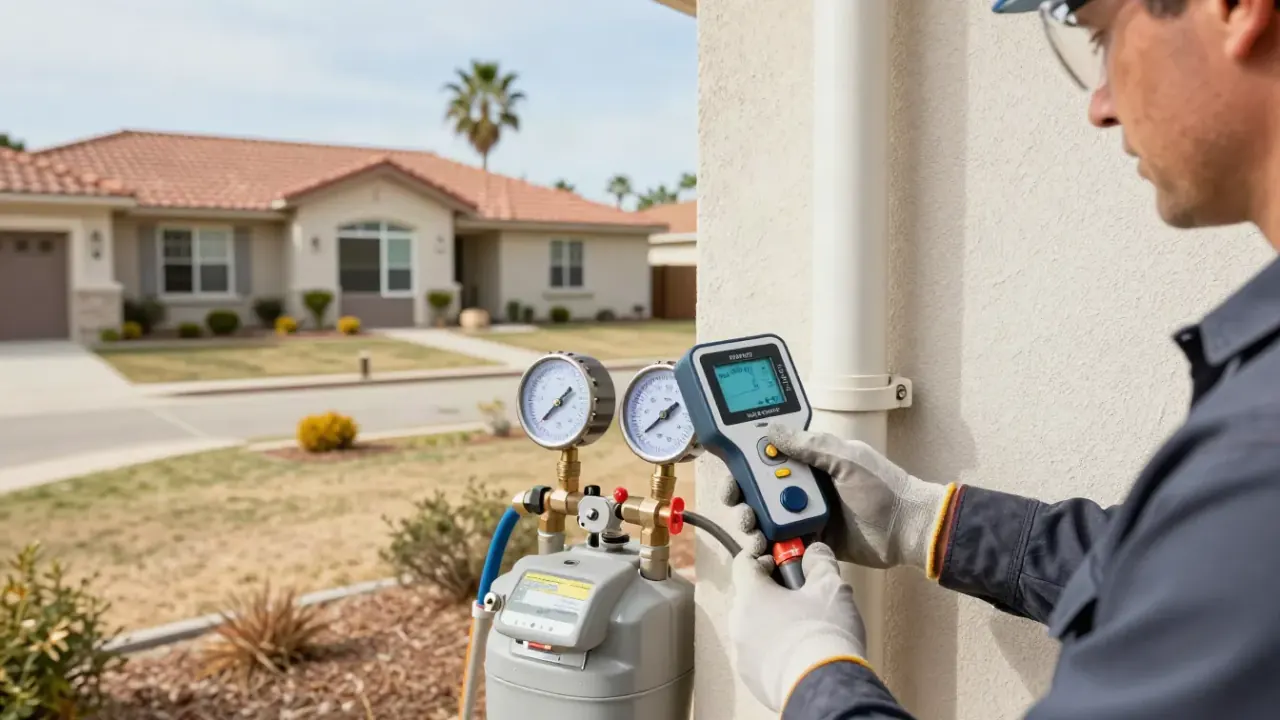
- Pressure test before you close the wall. A 10 to 15 PSI air test held for at least 15 minutes is standard on most residential jobs.
If you are adding a line for a new appliance rather than replacing an old one, the sizing math is the part most homeowners get wrong. We handle that as part of Gas Line Installation for Appliances Fountain Valley CA.
What Gas Pipe Materials Are Code-Approved in Fountain Valley?
What gas pipe materials are code-approved in Fountain Valley comes down to the California Plumbing Code: black steel, wrought iron, copper Type L or K, CSST listed to ANSI LC 1, and listed flexible connectors. Anything else - PVC, galvanized in some applications, or unlisted tubing - is a red flag.
A few specifics worth knowing:
- Galvanized pipe is generally not allowed for gas because the zinc coating can flake and clog appliance orifices.
- Aluminum tubing is prohibited outright for natural gas in California.
- CSST must carry the ANSI LC 1 listing and be bonded per the manufacturer's instructions.
- Copper must be hard-drawn Type L or K with brazed or flared joints - no soft copper, no solder.
Permits for gas work in Fountain Valley are not optional. A new line, a relocation, or a full re-pipe needs a permit and an inspection. We handle that paperwork for our customers through Gas Line Permit and Inspection Coordination Fountain Valley CA, which is usually the difference between a one-week job and a one-month headache.
What to Watch Out For
The most common mistake we see is mixing materials without thinking about how they will react. Steel and copper in contact with each other, especially in a damp garage, will corrode at the joint faster than either would alone.
Other things to watch:
- Undersized pipe. A 1/2-inch line feeding a tankless water heater will starve the unit and shorten its life.
- Missing CSST bonding. We find this on roughly one in four CSST installs done by non-specialists.
- Old flexible connectors. If the date stamp on the connector is more than 8 years old, replace it.
- Bare steel in soil. Our soil plus coastal moisture eats unprotected pipe.
- Unpermitted work. It shows up at resale, and it shows up at insurance time.
If you are seeing rust flakes, a green tint on copper, or you smell gas near a joint, stop and call. We handle that as an emergency through Corroded Gas Pipe Replacement Fountain Valley CA.
When to Call a Professional
Call a licensed gas contractor when the work involves a new run, a material change, anything inside a wall, or any smell of gas. Those four categories cover almost every job that needs a permit and a pressure test.
You can safely tighten a flexible connector by hand, replace a range connector with a new listed one, and reset a pilot light. You should not be cutting into a gas line, threading pipe, or brazing copper on your own. The tools alone - a pipe threader, a pressure gauge, a combustible gas detector - cost more than the job.
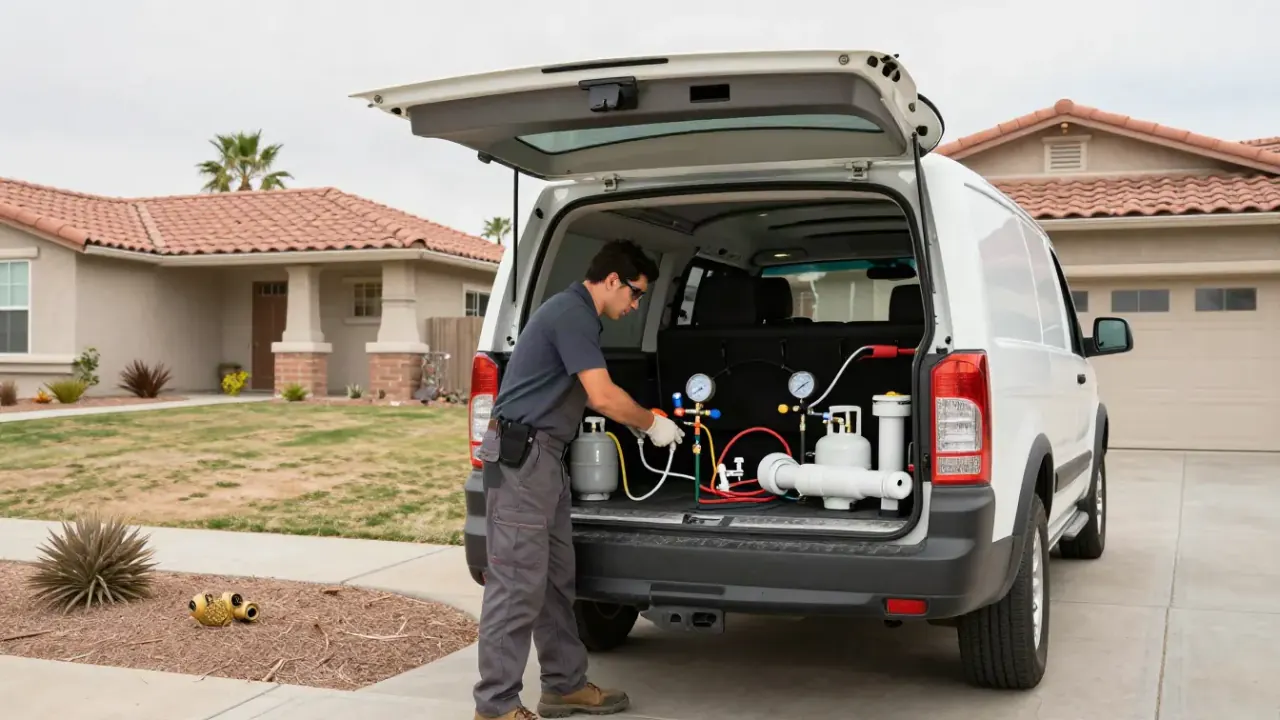
Fountain Valley Gas Line Repair runs gas lines, replaces corroded pipe, and pressure tests every job before we leave. If you are not sure what material you have or whether it is safe, we will tell you straight.
Frequently Asked Questions
What gas pipe material is best for my Fountain Valley home?
Black iron for exposed and exterior runs, CSST for long concealed runs in attics or crawlspaces, and copper only where it is protected from salt air. If your home was built before 1980, expect the exterior stub to be original steel and worth inspecting.
Is black iron or copper better for gas lines in Fountain Valley CA?
Black iron is better for almost every residential job here. It costs $18 to $30 per linear foot installed versus $22 to $38 for copper, and it does not corrode in our coastal air the way unprotected copper does. Copper only wins when you need a tighter bend radius.
How do I choose gas piping materials in Fountain Valley?
Match the material to the run, size the pipe to the total BTU load, and confirm the choice with the city before you start. A 3/4-inch line that works at 30 feet is undersized at 70 feet, so the sizing math matters as much as the metal.
What gas pipe materials are code-approved in Fountain Valley?
Black steel, wrought iron, copper Type L or K with brazed or flared joints, CSST listed to ANSI LC 1, and listed flexible connectors. Galvanized pipe and aluminum tubing are not approved for natural gas in California.
How long does a gas pipe replacement take?
A single appliance line takes 3 to 6 hours. A full re-pipe of a 1,500-square-foot home typically runs 2 to 4 days, including the pressure test and inspection. Permit turnaround adds a few days on the front end.
Get Help With Gas Line Repair in Fountain Valley
If you are choosing gas piping materials for your home in Fountain Valley and want a straight answer about what your house actually needs, call us. We will look at the run, size the load, and tell you what material belongs there.
Call Fountain Valley Gas Line Repair at (657) 644-0068 for a same-week assessment.